
There’s a reason fiberglass pools in Kansas City soil and weather conditions outperform every other pool type — and it’s not marketing. It’s engineering. If you’re building a pool in Olathe, Overland Park, Leawood, or anywhere in Johnson County, the ground your pool sits in and the climate it lives through should be the first factors that drive your pool type decision. This is a technical breakdown from a contractor who works in this soil every day.
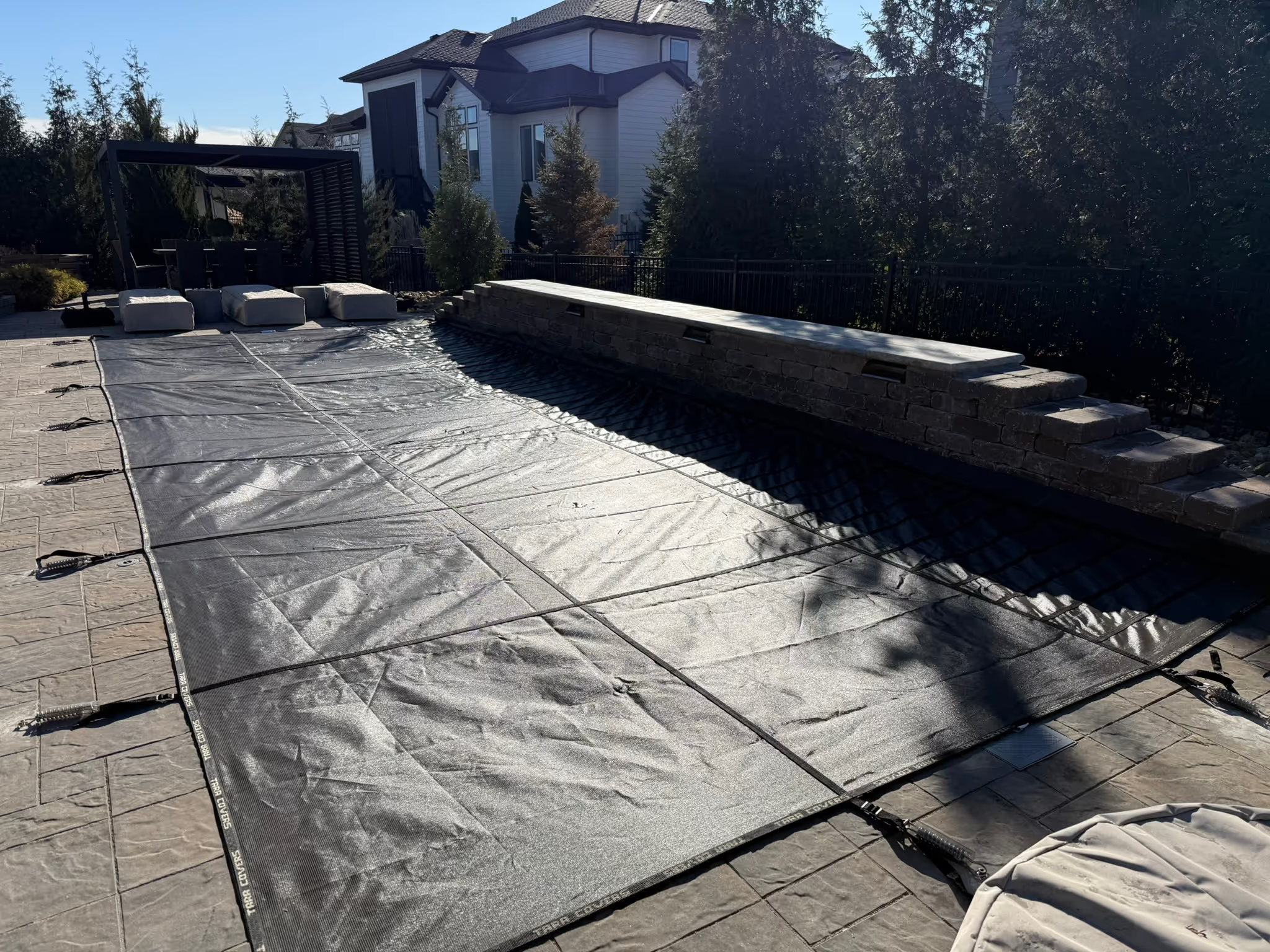
Why Fiberglass Pools Perform Best in Kansas City Soil
Johnson County sits on clay-dominated soils — primarily Shelby and Grundy clay loam series. These soils have a high shrink-swell coefficient, meaning they expand significantly when wet and contract when dry. The seasonal moisture cycle in Kansas — dry summers, wet springs, frozen winters — puts this soil through continuous movement.
The engineering implication is straightforward: a pool structure must either resist that movement (which requires expensive reinforcement) or flex with it. Fiberglass composite shells do the latter. The material has a natural elasticity that allows the shell to move slightly with soil shift without cracking. Concrete does not have this property — which is why gunite pools in our region develop structural cracks more frequently than in areas with stable sandy soils.
Freeze-Thaw Cycles in Johnson County: What They Do to Your Pool
The Olathe area averages 20–40 freeze-thaw events per winter — days where temperatures dip below 32°F and then climb back above it. Each cycle stresses any structure embedded in the ground. Water in the soil freezes, expands, and exerts upward pressure (frost heave). Then it thaws, contracts, and the ground settles.
Fiberglass handles this cycle better than concrete for three reasons:
- Composite shell flexibility: Can absorb minor movement without fracture. A properly installed fiberglass pool with correct gravel backfill and drainage will not crack from frost heave under normal conditions.
- Non-porous surface: Water cannot penetrate the gel coat and freeze within the shell material itself — the primary mechanism that causes concrete surface delamination and pitting in cold climates.
- Lower water loss during winter: Fiberglass pools can winter with water in them at reduced levels. The smooth surface doesn’t absorb freeze-thaw moisture the way plaster does.
Want to see how a fiberglass pool performs on your specific Olathe lot? Talk to Hometown Pool about your site →
Kansas Summers: Heat, Chemistry, and the Fiberglass Advantage
Johnson County summers run hot — regularly hitting 95–105°F in July and August. High evaporation rates, UV exposure, and bather load all stress pool water chemistry. In concrete pools, the porous plaster surface absorbs and releases chemicals unpredictably, making balance harder and chemical consumption higher. Homeowners with gunite pools in Olathe routinely spend $800–$1,500/year on chemicals versus $300–$600 for fiberglass owners.
The fiberglass gel coat is an inert, non-porous surface. It doesn’t consume chemicals, doesn’t harbor algae, and doesn’t require the acid washing that porous plaster eventually needs. In a Kansas summer, that means less time dosing and more time swimming.
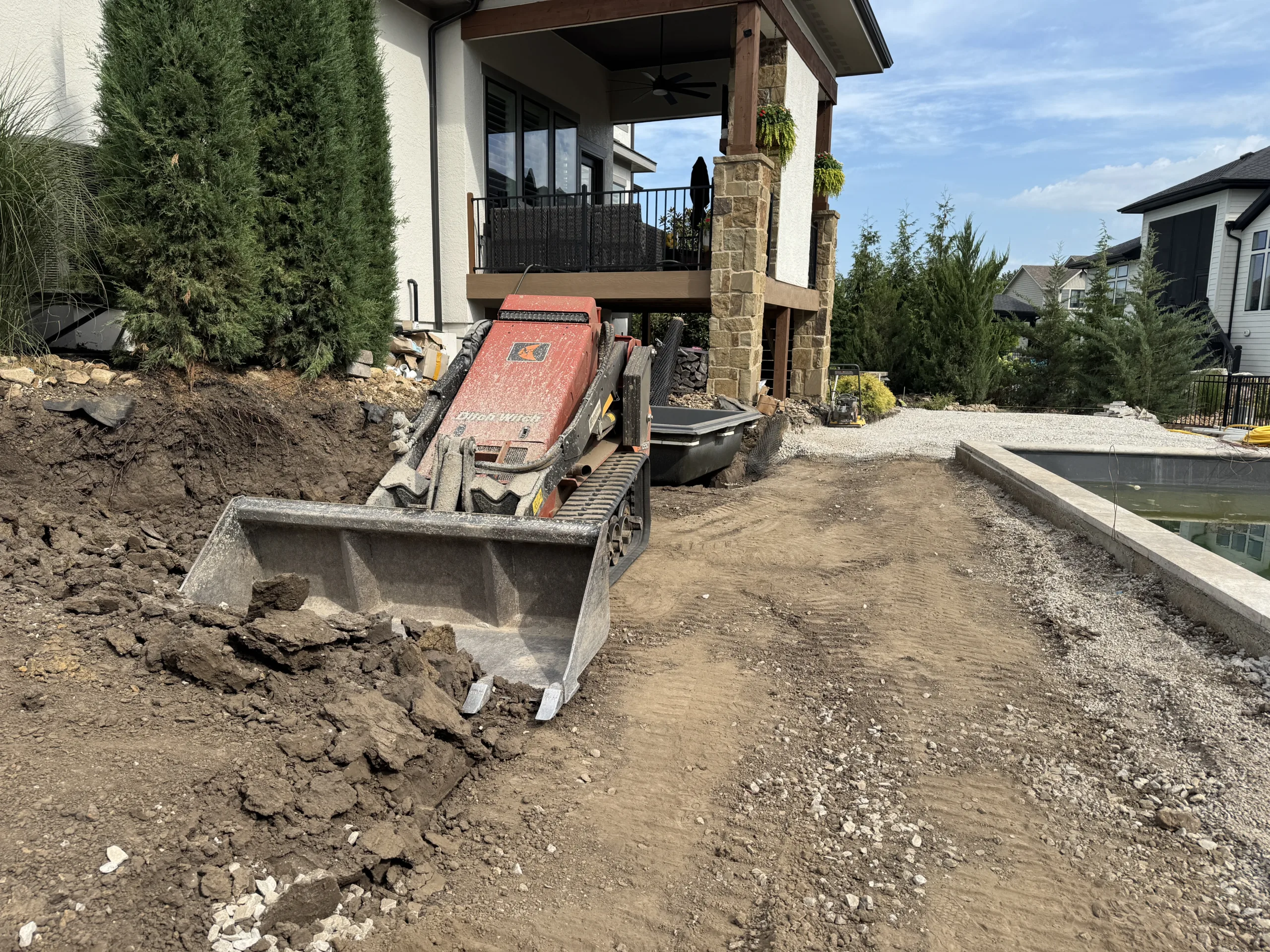
Proper Installation in Kansas Clay: What Makes or Breaks a Fiberglass Pool
A fiberglass pool’s resilience in Kansas soil is only as good as the installation behind it. This is where many pool builders cut corners — and where Hometown Pool doesn’t.
The critical installation steps for Kansas clay soil:
- Proper backfill material: The excavated clay should not go back around the shell. A gravel-sand mix (typically #57 stone) provides drainage and prevents the clay from gripping the shell during soil movement. Skipping this is the single biggest installation mistake we see from competitors.
- Drainage channel: Ground water in Johnson County’s clay can accumulate around the shell. Perimeter drainage — either a French drain or drainage aggregate that connects to daylight — prevents hydrostatic pressure from building under the shell.
- Concrete bond beam: The poured concrete collar that anchors the top of the shell must be properly designed to hold level through seasonal movement. An undersized bond beam allows the top of the pool to shift over time.
- Equipment protection: In Kansas winters, equipment pads need drainage design that keeps standing water away from pumps and valves during freeze cycles.
What This Means for Your Investment in Johnson County
A fiberglass pool installed correctly in Johnson County clay soil, with proper drainage and backfill, should deliver 25–30+ years of service with minimal structural maintenance. The shell itself carries a lifetime structural warranty. The gel coat finish typically lasts 15–25 years before any surface work is needed — compared to gunite plaster that often requires full refinishing every 8–12 years in our climate.
At Hometown Pool, we’ve built this discipline into every installation: proper backfill, drainage, and bond beam engineering aren’t optional — they’re standard. As an authorized Leisure Pools dealer in Olathe, we back our installations with the kind of engineering care that holds up through Kansas seasons for decades.
📞 Schedule a consultation with Hometown Pool in Olathe. We’ll assess your soil, drainage, and site conditions and tell you exactly how we’d build to last in your specific yard. Start here →